Case study · Public data · Automation
Naples Day
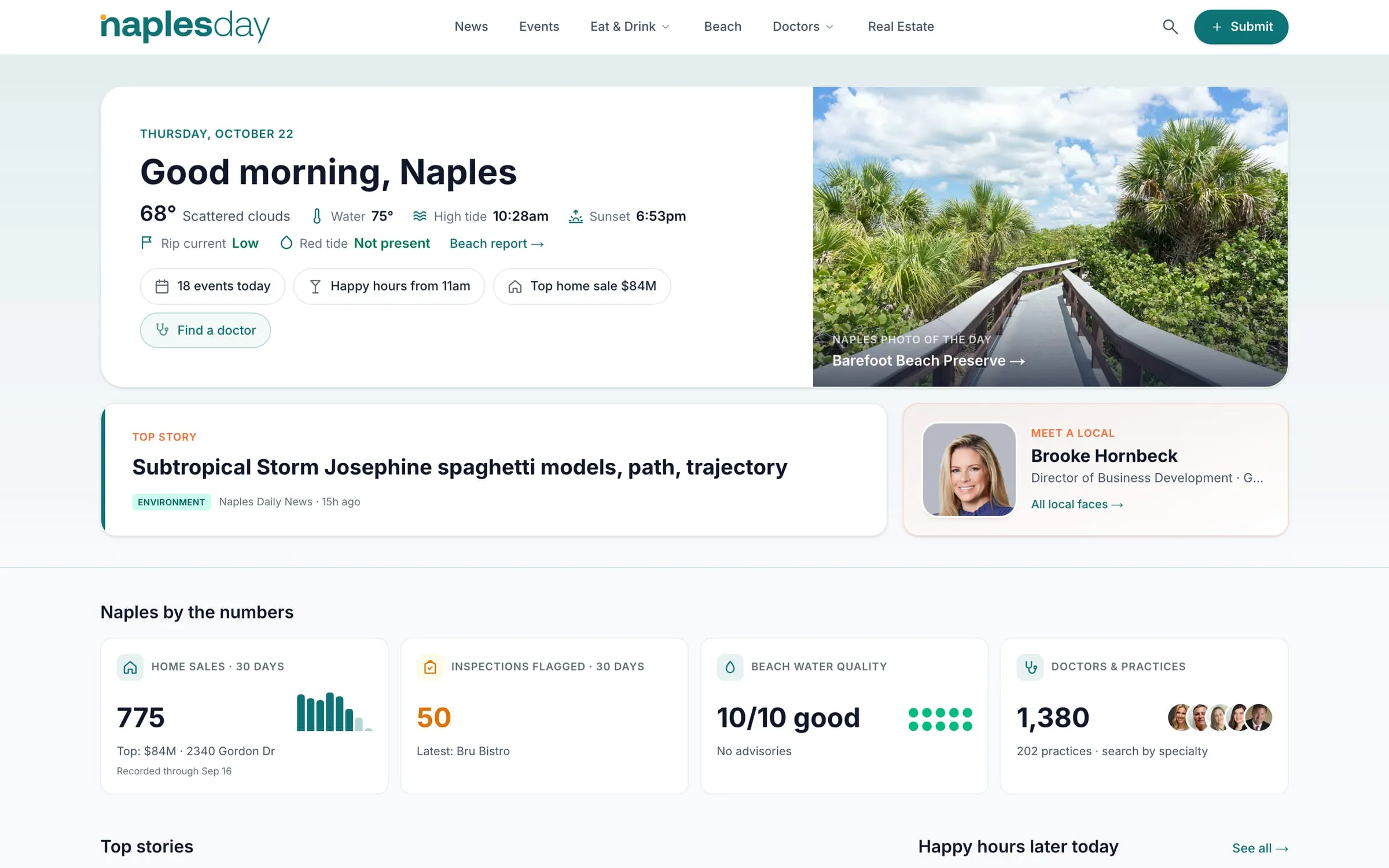
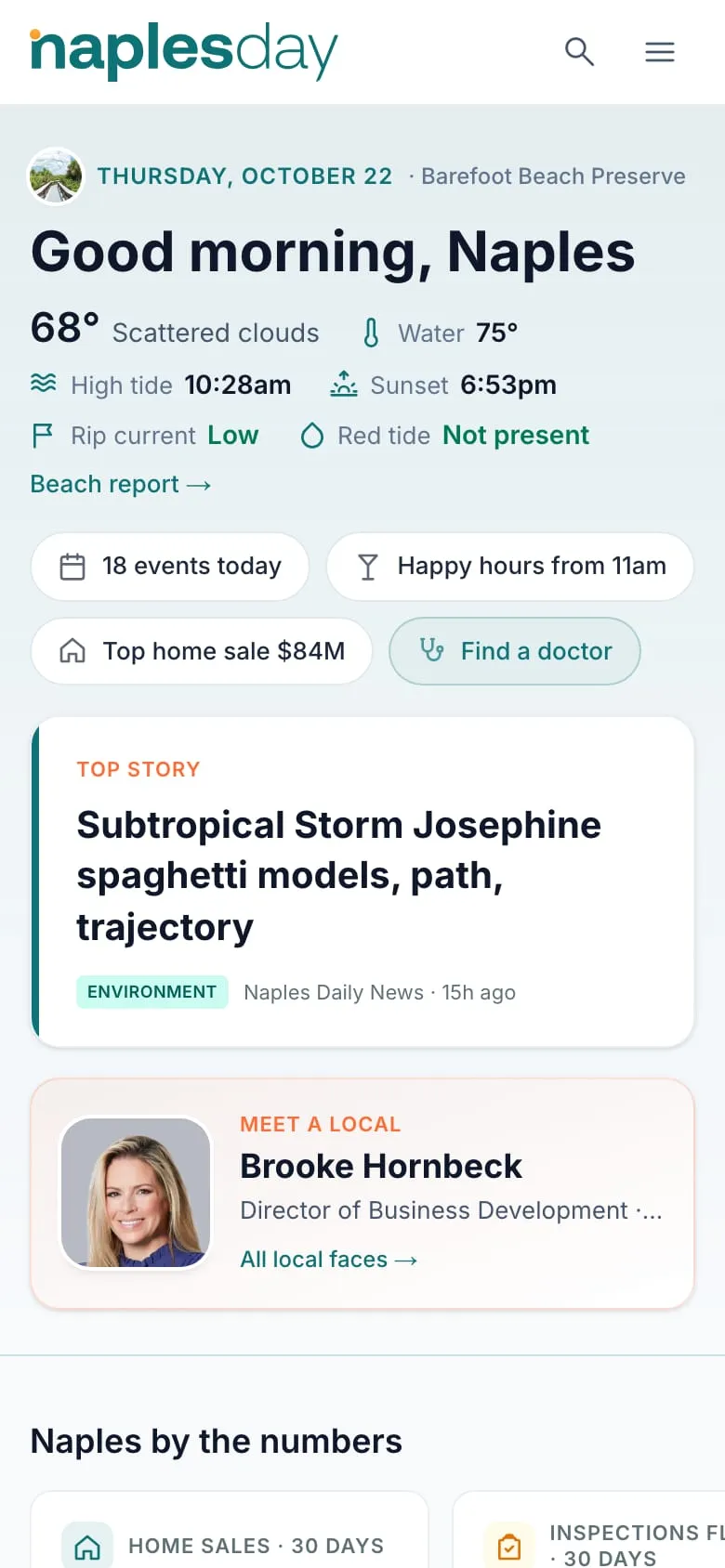
A daily dashboard for Naples built from public data: beach conditions, red tide, water quality, tides, restaurant inspections, home sales, doctors and local news. It updates itself on a schedule, without a newsroom.
- State and federal data, made readable
- AI extraction, double-checked
- Runs itself on scheduled pipelines
The problem
The most useful facts about living in Naples are already public. Is there red tide? Is the water safe today? Who failed a restaurant inspection? What did that house on Gordon Drive sell for?
They’re scattered across state and federal agencies, in formats nobody reads: ArcGIS map layers, CSV extracts, satellite datasets and embedded database tables.
What I built
A morning-glance site that pulls each source on its own schedule and turns it into something a local can read in ten seconds.
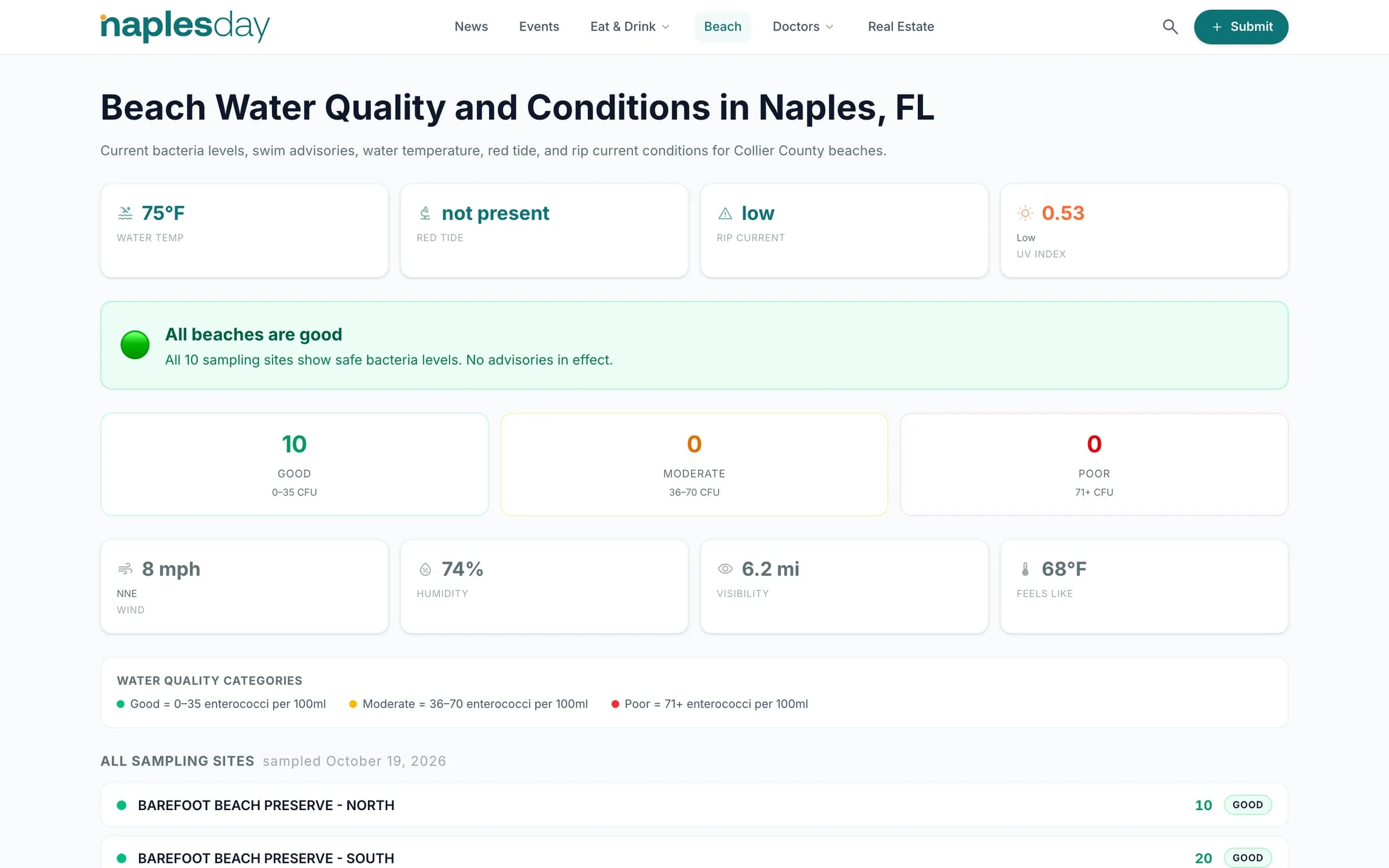
- Beach conditions: red tide from Florida FWC, water temperature from NOAA satellite data, rip-current risk from the National Weather Service, and tides from the NOAA station at Gordon Pass.
- Water quality: bacteria sampling at every Collier County beach site from the Florida Department of Health’s Healthy Beaches program.
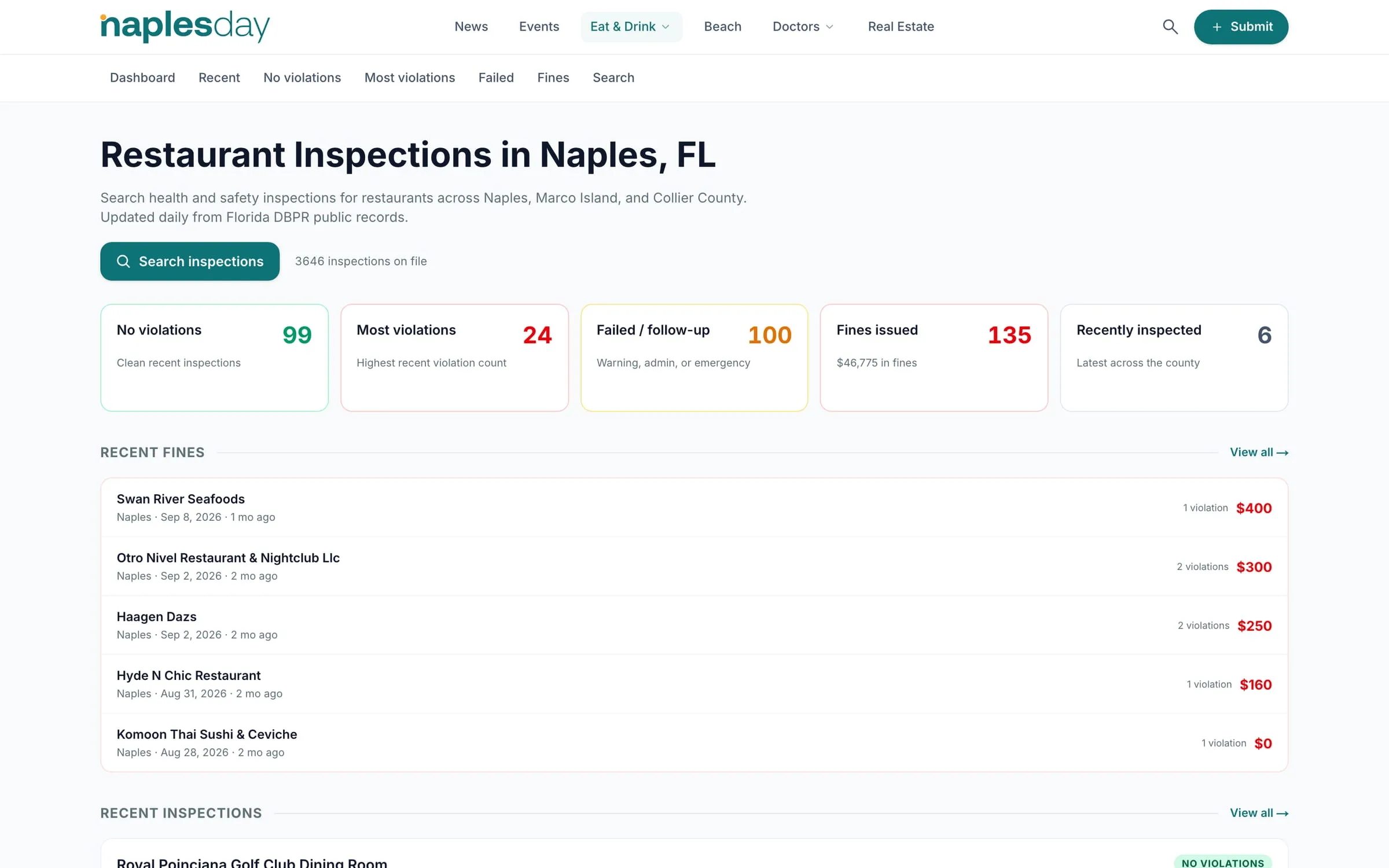
- Restaurant inspections: Florida DBPR’s daily inspection extract, plus fines.
- Home sales: the Collier County Property Appraiser’s sales export, geocoded with the US Census geocoder.
- Doctors: provider directories from local health systems, cross-referenced with federal CMS provider data.
- News: local feeds every two hours, deduplicated and edited by Claude.
Where AI helps
The site is mostly deterministic pipelines. Claude handles a few jobs that involve reading messy, human-written pages, and its output is checked.
- Happy hours and specials. Claude Haiku extracts deals from restaurant websites and must quote the page word for word as evidence. Then two independent verdicts must agree before anything publishes. If they split, the deal stays a draft and gets re-checked on the next run. Nothing publishes on one verdict, and nothing waits on a human.
- Restaurant hours. Structured schema.org data goes first, since it’s free and exact. Claude reads the page only when it has to, and every answer is checked against the page text. The first full run found hours for 229 of 370 restaurants. It cost $3.87.
- Doctor headshots. Claude Opus vision finds the face in each provider photo so every crop is consistent. That works out to about a third of a cent per photo.
- News. Haiku enriches each story. Then a single Sonnet editor pass reads every live headline at once, catches duplicates across runs, and ranks importance on one scale. It costs about $8 a month.
Why it matters for clients
Counties, associations, health systems and trade groups sit on public data that nobody reads. The pattern here turns it into a product people check every morning: scheduled ingestion, plain-language presentation, and AI only where it’s checked.